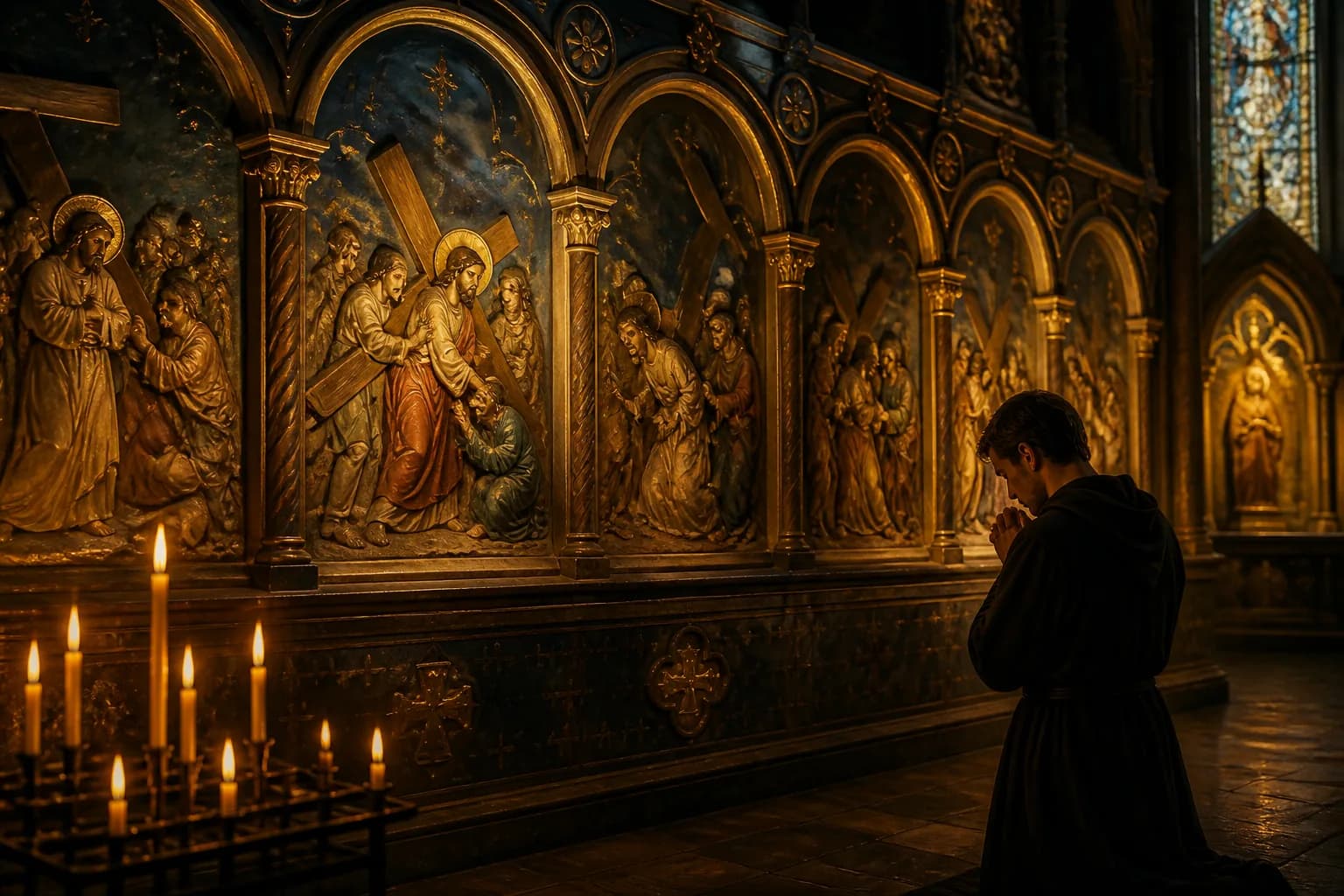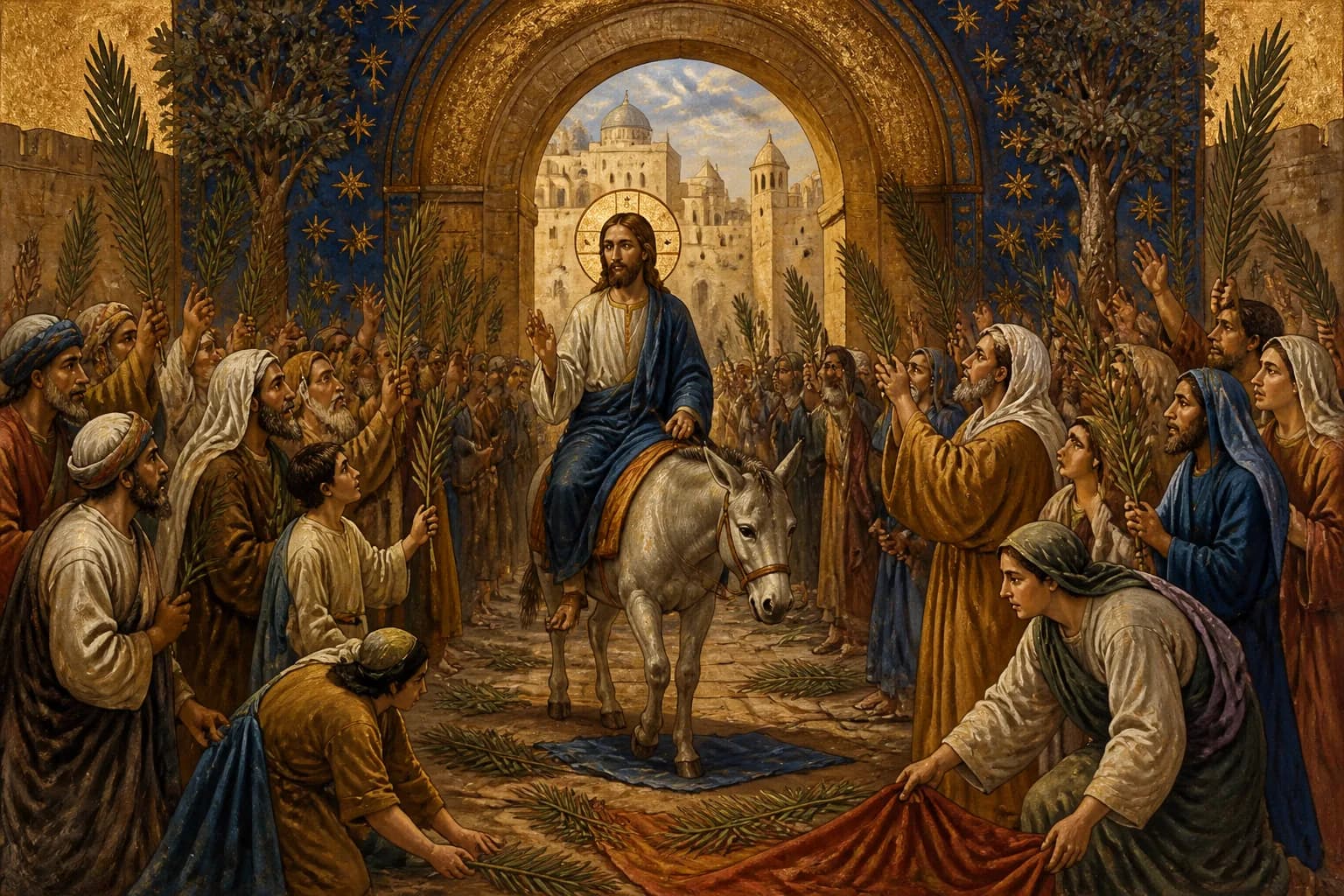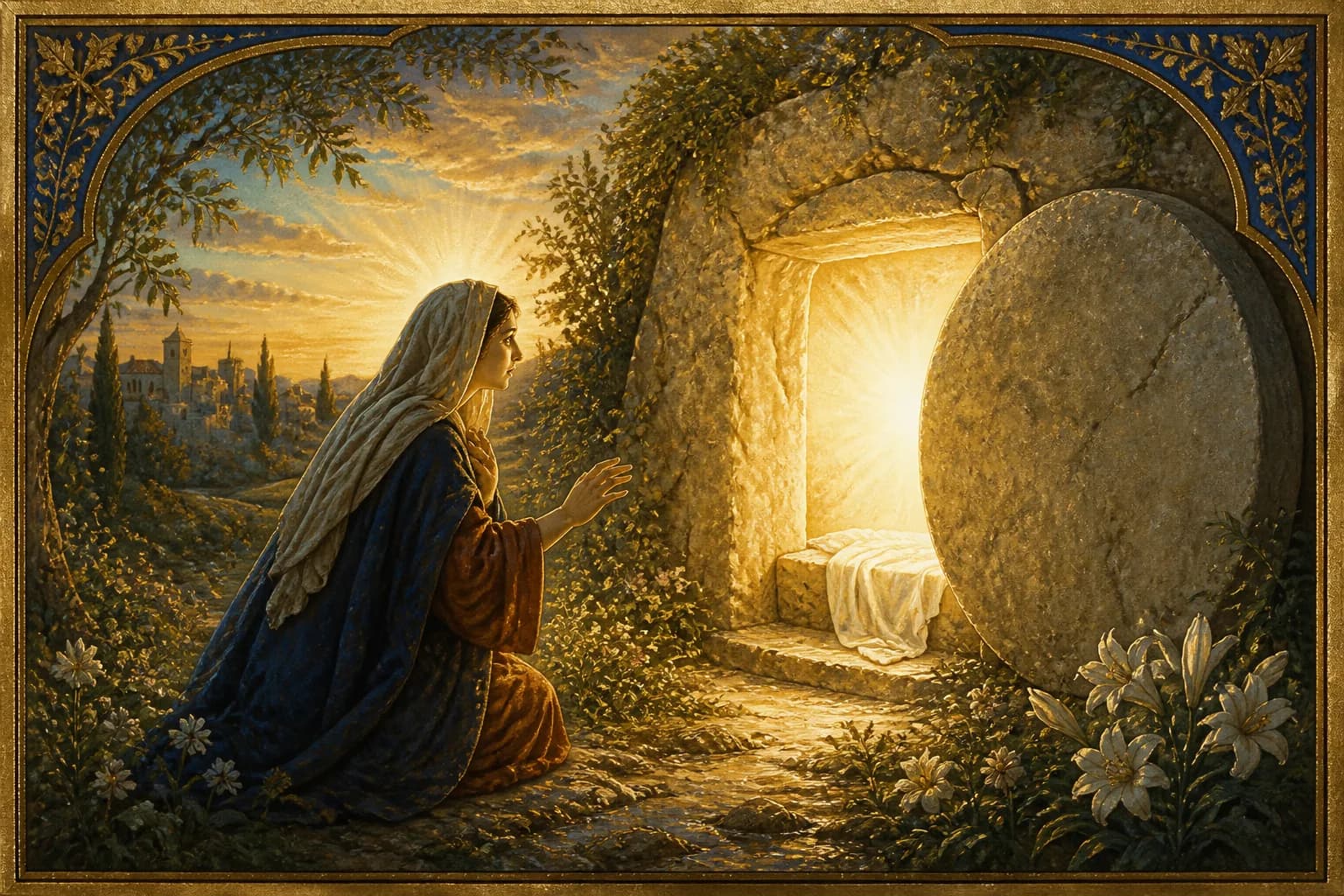
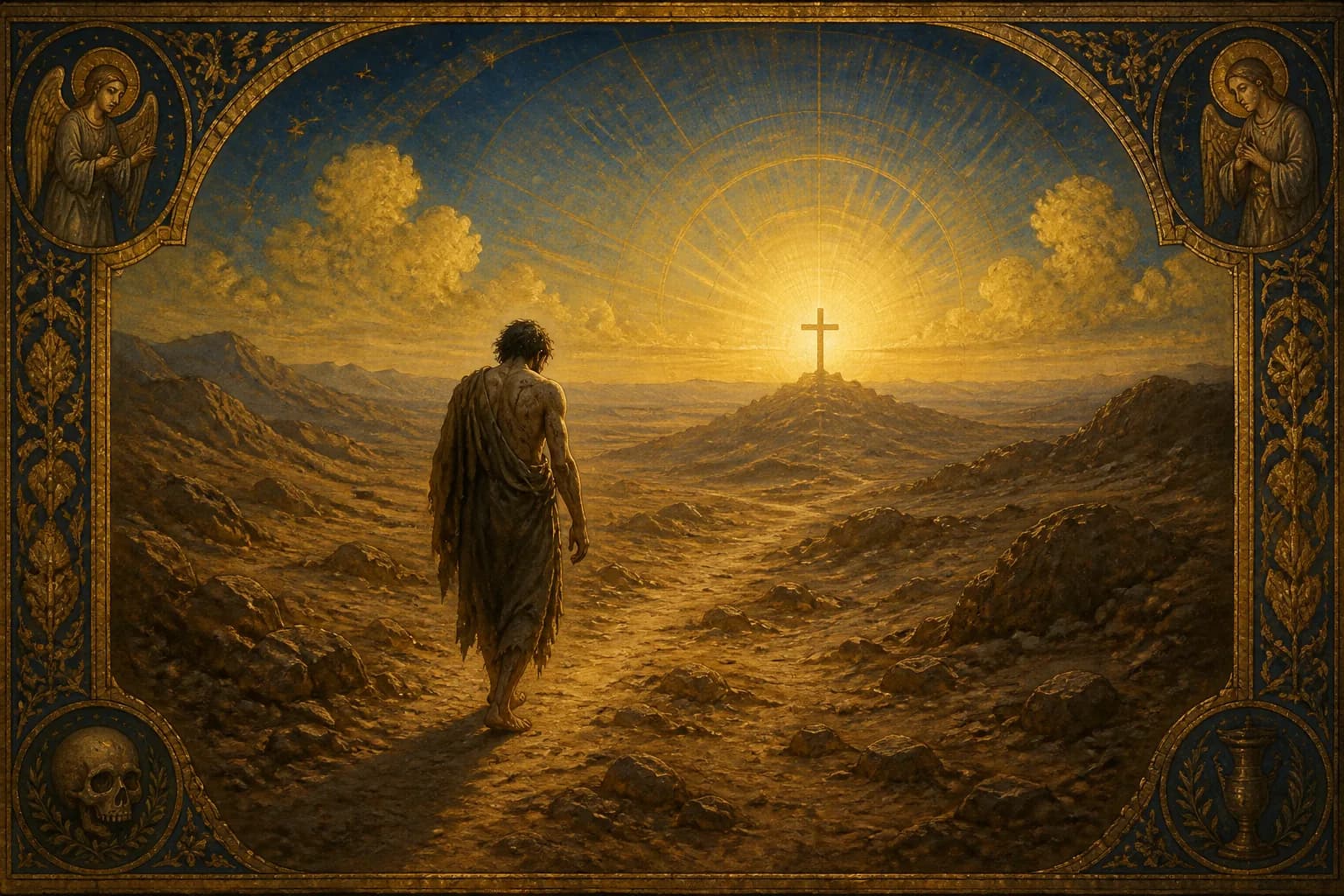
Every year, on a single Wednesday, millions of Christians walk out of church with a smudge of ash on their foreheads and a sentence ringing in their ears: Remember that you are dust, and to dust you shall return. That moment opens Lent — a season the Church has kept for many centuries to prepare the heart for Easter. It is solemn but not grim, demanding but full of hope. And almost everyone, sooner or later, asks the same question about it: why forty days?
What Lent actually is
Lent is the penitential season that leads up to Easter, the greatest feast of the Christian year. It begins on Ash Wednesday and runs until the start of the Easter Triduum — the three holy days that begin with the evening Mass of the Lord's Supper on Holy Thursday. From there the Church passes through Good Friday and the Easter Vigil into the joy of the Resurrection.
The point of the season is not self-punishment. It is conversion. Lent is a stretch of time deliberately set apart so that Christians can turn back toward God, clear away the clutter that has crept into their lives, and arrive at Easter ready to celebrate rather than merely to notice the date on a calendar. The liturgical color of the season is violet — the color of penance and of waiting — and the whole rhythm of those weeks is designed to slow a person down and reorder what matters.
Why forty days
The number forty is not arbitrary. It runs through the whole of Scripture as a span of testing, purification, and preparation. Most directly, Lent recalls the forty days Jesus spent fasting and praying in the desert before he began his public ministry, where he faced and rejected temptation. The Church walks those same forty days with him.
But the number reaches back further still. Moses spent forty days on Mount Sinai in the presence of God before receiving the Law. The people of Israel wandered forty years in the desert on their way from slavery to the Promised Land. The flood in the time of Noah lasted forty days. Again and again, forty marks a passage — a time of trial that leads to something new. By keeping forty days, the Church places the believer inside that long biblical pattern of being purified and made ready.
There is a small puzzle in the counting that is worth explaining. If you count the calendar days from Ash Wednesday to Holy Thursday, you will get more than forty. The reason is that Sundays are not counted as days of fasting and penance. Every Sunday is a celebration of the Resurrection, a small Easter, and so it is never a day of mourning, even in Lent. Subtract the Sundays, and the penitential days come to forty. The season is generous enough to honor the symbolism without ever asking anyone to fast on the day the Lord rose.
The three pillars — prayer, fasting, almsgiving
When Jesus taught his disciples how to live a hidden, sincere devotion, he named three practices in the Sermon on the Mount: prayer, fasting, and almsgiving. These three have always been the pillars of Lent, and they are meant to work together rather than in isolation.
Prayer turns a person toward God. Lent is a time to pray more, and to pray more honestly — more Scripture, more silence, more time with the One the whole season is about. Without prayer the other two pillars can shrink into mere willpower or charity drained of love.
Fasting turns a person away from excess. The familiar practice of "giving something up" for Lent belongs here. By going without food, comfort, or a habit that has too much hold on us, we relearn that we do not need everything we crave, and we make room for God in the space that hunger opens. Fasting is not a diet; it is a way of saying that the soul matters more than the appetite.
Almsgiving turns a person toward the neighbor. Whatever is freed up by fasting — money, time, attention — is given away to those in need. The three pillars form a circle: prayer lifts the heart to God, fasting empties the hands, and almsgiving fills them again with the good of others. A Lent that keeps all three stays balanced and outward-looking.
Ash Wednesday and the ashes
The season opens with one of the most striking signs in all of Christian worship. On Ash Wednesday the faithful come forward to have ashes marked on their foreheads, traditionally ashes made from the burned palms of the previous year's Palm Sunday. As the ashes are imposed, the minister says one of two ancient phrases: Remember that you are dust, and to dust you shall return, or Repent, and believe in the Gospel.
Both sentences set the tone for everything that follows. The first is a blunt reminder of mortality — a refusal to let anyone drift through life pretending it will not end. The second is the invitation that answers it — a call to turn around while there is still time. The ashes are not a badge of holiness but a confession of need, worn in public, marking the start of a journey rather than its arrival.
How to live it well
A good Lent does not require heroics. It requires a plan that you can actually keep, touching all three pillars rather than leaning on one. Choose a way to pray more — a few minutes of Scripture each morning, a return to a Mass you have been skipping, a fixed time of silence. Choose something real to give up, something whose absence you will genuinely feel. And choose a concrete way to give — to a person, a parish, a cause — so that what you save does not simply stay saved.
Keep it modest and keep it steady. It is better to hold a small resolution for forty days than to make a grand one and abandon it by the second week. Remember, too, that Sundays are not days of penance: they are built-in reminders of where the whole season is going. And let the goal stay in view. Lent is not the destination. It empties the hands and quiets the heart precisely so that Holy Week — the Triduum of Holy Thursday, Good Friday, and the Easter Vigil — and then the morning of the Resurrection can land with their full weight. Forty days of preparation exist for the sake of an eternity of joy.
Crucis Lux walks through the Passion as a narrated, illustrated series — a fitting companion for Lent. Find the Passion series in the app.