Ask why October is the month of the Rosary and you will usually get one of three answers: a sea battle, a pope with a typewriter, or a field in Portugal. All three are right, and they arrived in that order. The devotion did not appear at once; it accumulated, across three and a half centuries, until October settled into the Catholic year as the month the beads come out.
1571: Lepanto
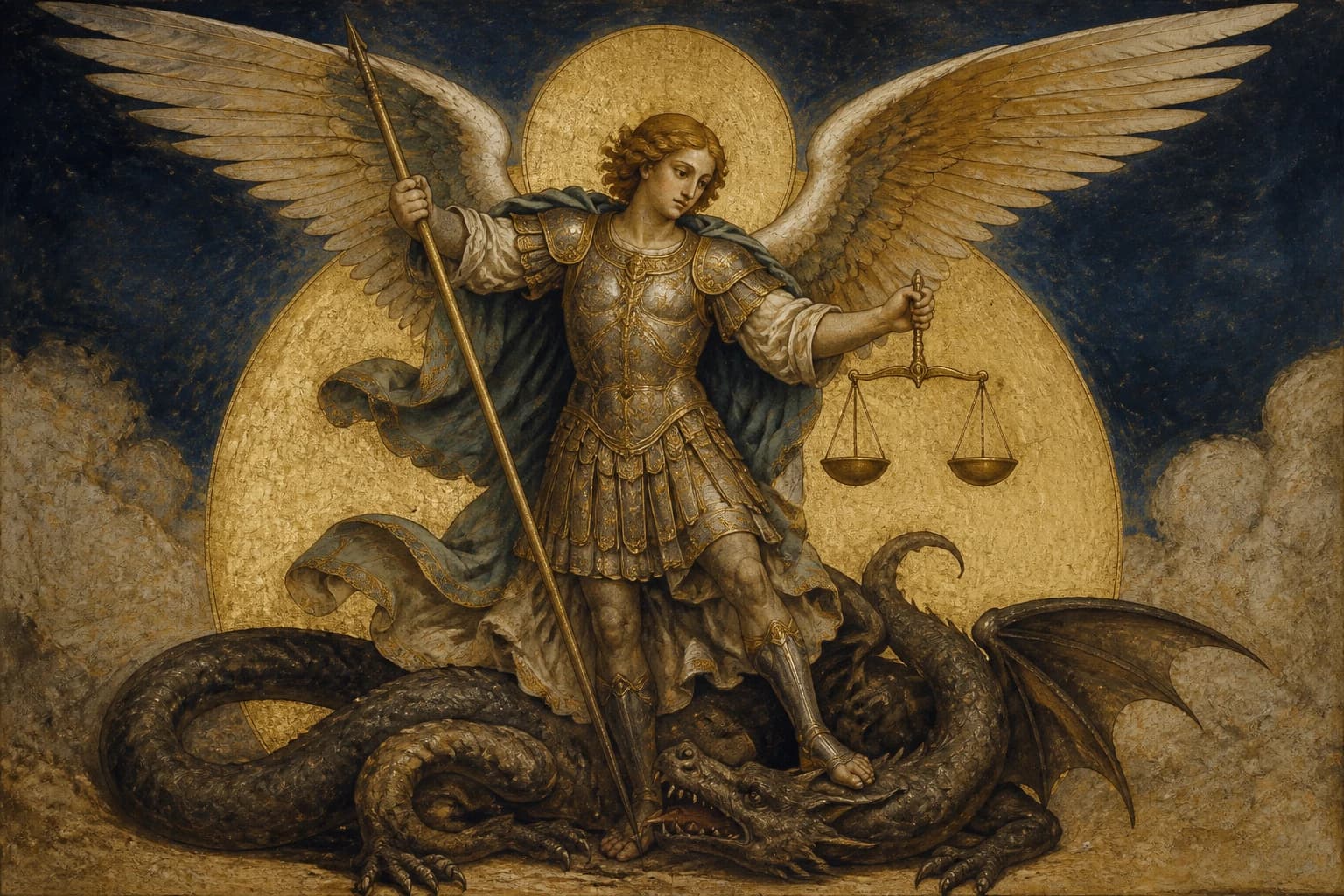
On 7 October 1571, the fleet of the Holy League — a coalition of Spain, Venice, the Papal States and others — met the Ottoman fleet in the Gulf of Patras, off Lepanto. It was one of the last great galley battles in history, fought at close quarters with oars and boarding parties, and it ended with the Ottoman fleet destroyed.
Pope Pius V, a Dominican, had asked for the Rosary to be prayed across Europe for the outcome, and the confraternities of the Rosary had processed in Rome that day. When news of the victory arrived, he attributed it to Mary's intercession and instituted a feast of Our Lady of Victory. His successor Gregory XIII renamed it Our Lady of the Rosary in 1573 and fixed it on 7 October.
It is worth being precise about the claim being made. The Church did not declare that the Rosary functions as a military instrument. It declared a feast of thanksgiving, and the association between the date, the beads and the deliverance stuck — vividly enough that Chesterton could still write a popular ballad about it three centuries later.
1883–1898: Leo XIII
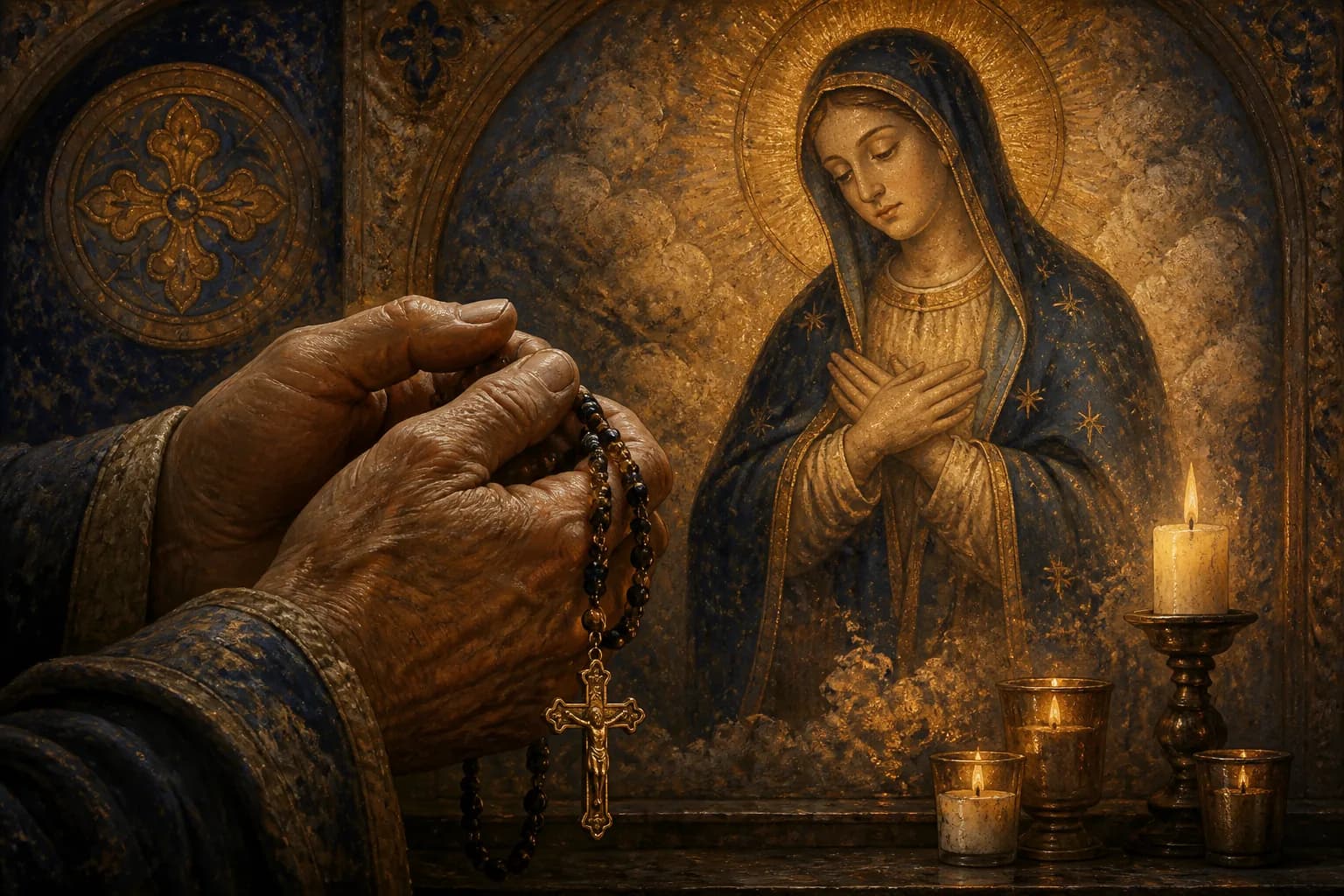
The month itself, rather than the single day, is the work of one pope. Between 1883 and 1898 Leo XIII issued eleven encyclicals on the Rosary — an extraordinary concentration of teaching on a single devotion. The first, Supremi apostolatus officio, asked that in October the Rosary be prayed daily in every parish church, and that the Litany of Loreto be added to it. Later documents made the October practice a settled expectation and tied it to the family: the Rosary prayed at home, together, in the evening.
That is where the modern shape of the month comes from. If your grandmother's parish said the Rosary every October evening at seven, Leo XIII is the reason.
1917: Fátima, 13 October
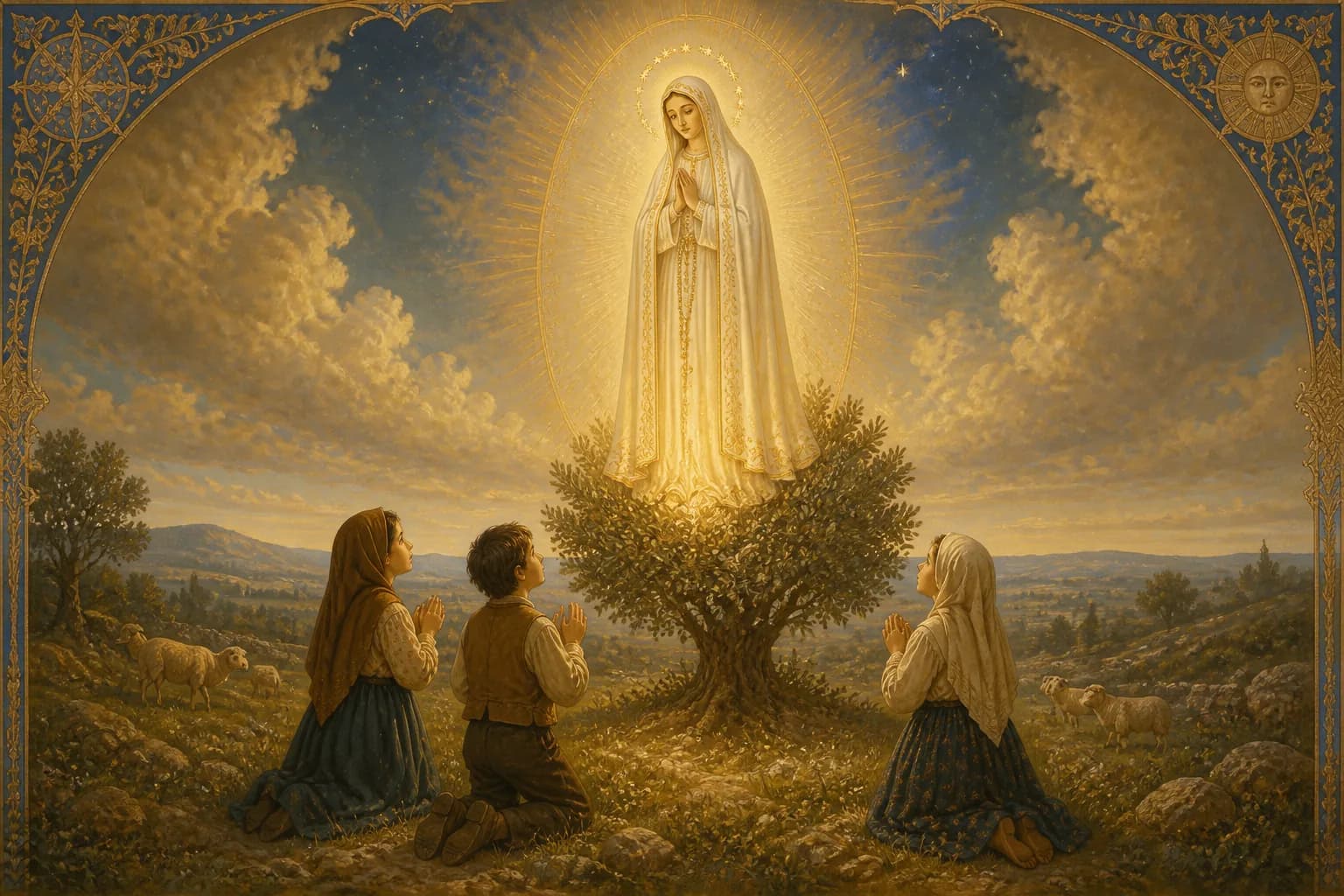
On 13 October 1917, at the last of the six apparitions at the Cova da Iria, the lady who had appeared to Lúcia, Francisco and Jacinta told them plainly: "I am the Lady of the Rosary." Across the six months she had asked repeatedly that the Rosary be prayed every day — for peace, at a moment when Europe was in the third year of a war that would kill millions.
That same afternoon, before a crowd estimated in the tens of thousands who had come in rain and mud, witnesses reported the phenomenon that became known as the Miracle of the Sun. We have covered both the apparition and the day itself in detail: the Miracle of the Sun, 13 October 1917 and the message of Our Lady of Fátima.
Whatever a reader concludes about the events, their effect on the devotion is not in dispute: after 1917, October carried both the feast and Fátima, and the daily Rosary became the single most requested practice in twentieth-century Catholic piety.
A note on the "fifteen promises"
You will find, on many websites, a list of fifteen promises made to those who pray the Rosary — attributed to the Blessed Virgin through the Dominican Alan de la Roche in the fifteenth century. They circulate widely and are often printed on prayer cards.
Their provenance is weak. The list appears in this form only centuries after Alan's death, and the Church has never given it any formal approval. Nothing prevents anyone from praying the Rosary with confidence, but the honest framing is that these promises are a popular devotional text of uncertain origin, not a guarantee the Church has ever underwritten.
How to actually keep the month
The failure mode is predictable: an ambitious plan on 1 October, silence by the 9th. A month is long. Build for the 31st, not the 1st.
- Pick one decade, one time, one place. The commute, the dishes, the walk to school. A decade takes four minutes and survives a bad week.
- Anchor it to something you already do, not to a resolution to be more spiritual. Habits attach to other habits.
- Use the two dates as landmarks. The 7th, Our Lady of the Rosary, and the 13th, the last apparition at Fátima. If you have drifted by then, they are a natural restart.
- Pray it with someone if you can. Leo XIII's whole emphasis was the family Rosary, and the practical reason is simple: two people rarely forget on the same evening.
- If you are new to it, keep the step-by-step guide open on your phone for the first week. Nobody is judging the bookmarks.
The Rosary's durability has never come from intensity. It comes from being short, repeatable, and forgiving of interruption — a prayer built for people whose lives keep breaking their concentration. October is simply the month the Church tells everyone to try again.