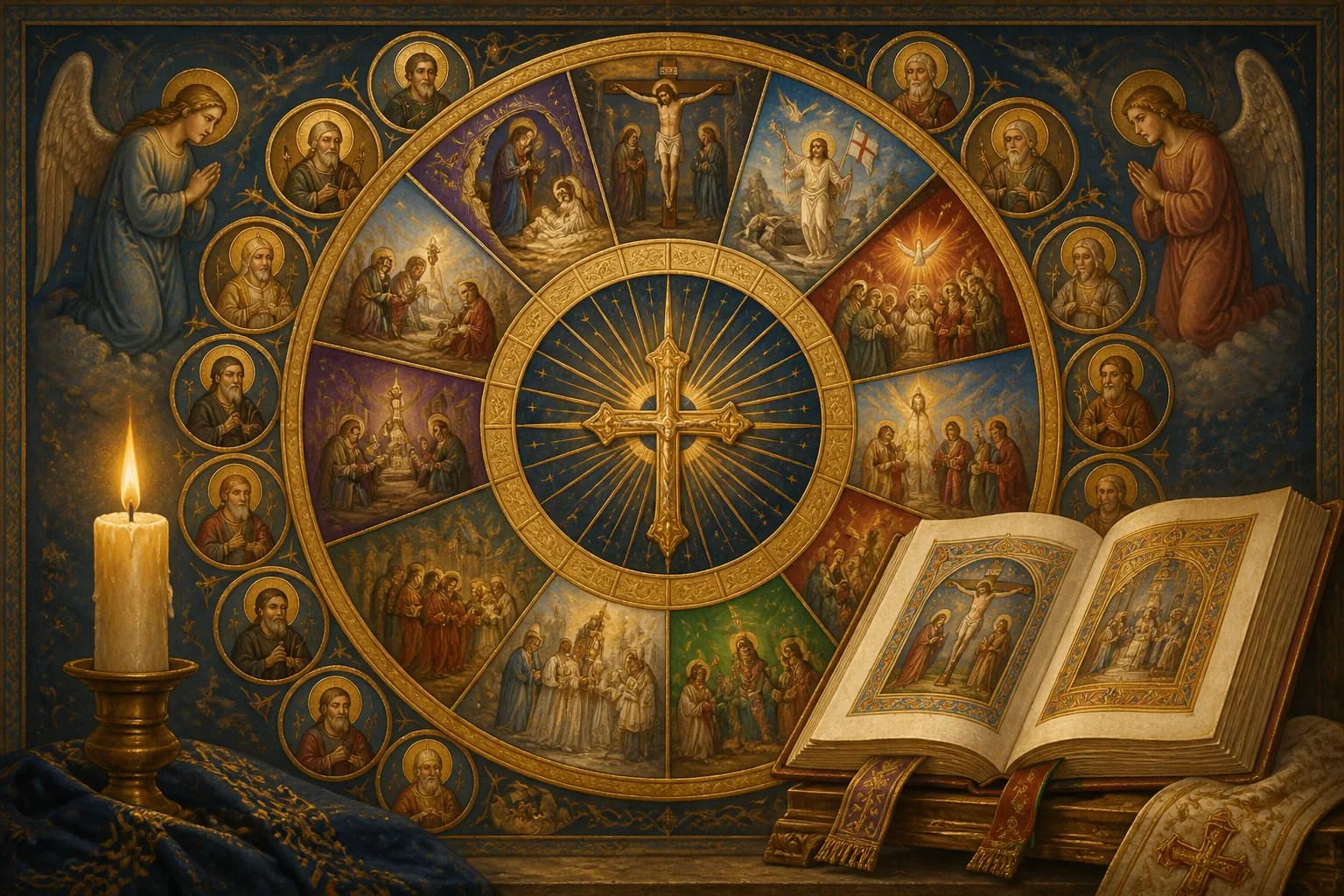
Open almost any Catholic app, parish bulletin, or daily missal and you will find a familiar line near the top of the page: the saint of the day. It might be a famous name like Francis of Assisi or Thérèse of Lisieux, or a martyr from the early centuries whose story most people have never heard. Behind that single line stands one of the oldest and most carefully tended systems in the Church — the liturgical calendar, which assigns saints and sacred mysteries to the days of the year so that the whole rhythm of time is shaped by faith. Here is how it works, and why there is, in fact, a saint for nearly every day.
What "saint of the day" really means
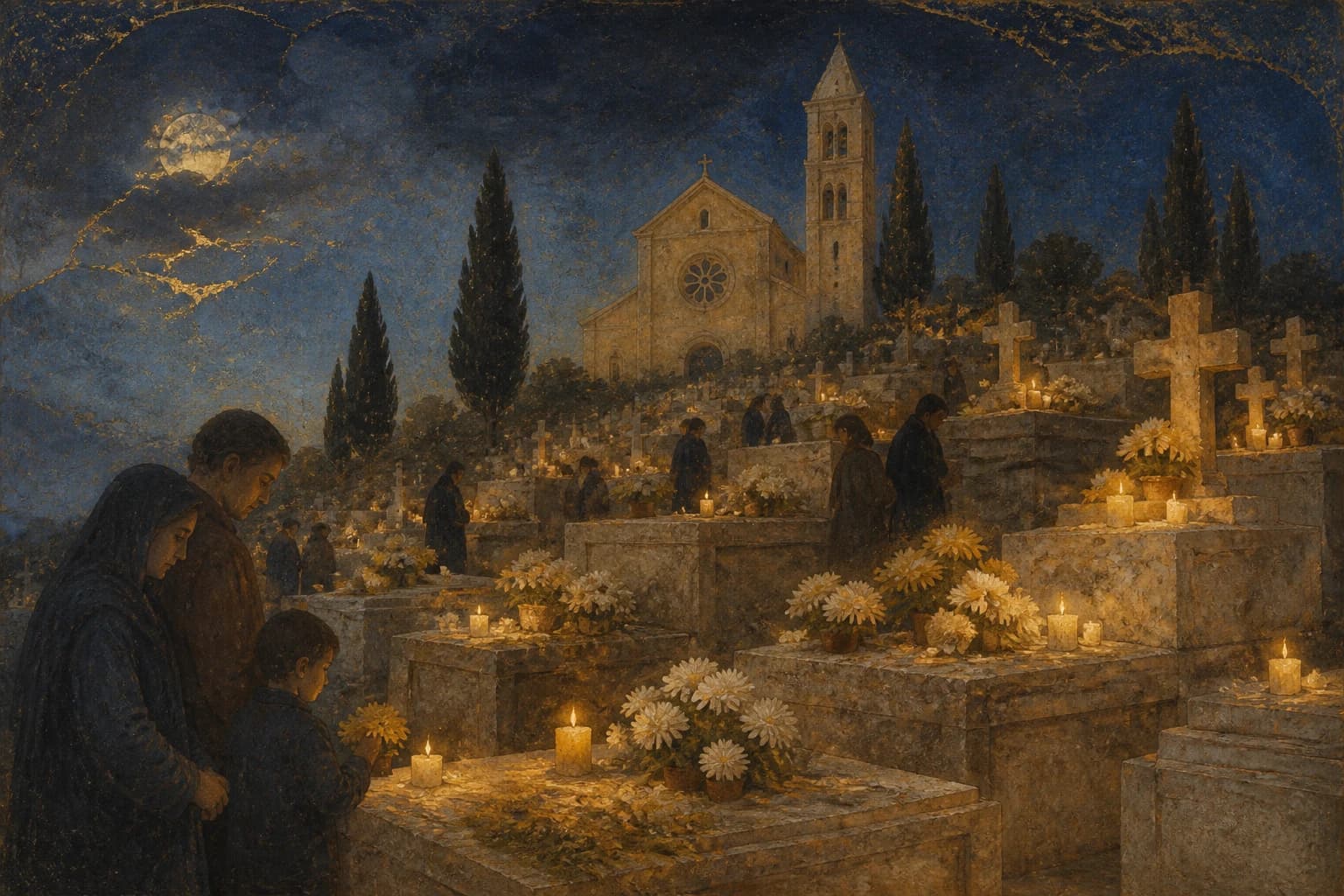
The Church does not pick saints at random. Each day of the year is associated with one or more holy men and women, so that across the twelve months the faithful walk, almost literally, through the company of the saints. This is not a modern marketing idea. The roots reach back to the early Church, when local communities kept the anniversaries of their martyrs and gathered at their tombs to celebrate the Eucharist on those dates.
To "follow the saint of the day," then, is to join a tradition nearly two thousand years old: remembering a particular witness to Christ, learning from their life, and asking for their prayers. The calendar turns the year into a kind of moving catechism — every day a new example of holiness, drawn from every century, continent, and walk of life.
The dies natalis — a birthday into heaven
One feature surprises many people: a saint's feast is usually celebrated on the day of their death, not the day of their earthly birth. The Church calls this the dies natalis — Latin for "birthday" — because it considers the day a saint dies to be the day they are truly born into the life of heaven.
This way of seeing death is ancient and deliberate. The earliest Christians honored their martyrs precisely on the dates of their executions, convinced that those who died for Christ had passed into glory. So the calendar remembers Saint Augustine on August 28 (the day he died in 430) and many others on the anniversary of their passing.
There are deliberate exceptions, and they are revealing. The Church celebrates the Nativity of the Blessed Virgin Mary on September 8 and the Nativity of Saint John the Baptist on June 24 — actual birthdays — because of the unique role these two figures play in salvation history. As a rule, though, when you see a saint's feast, you are marking the day they entered eternal life.
Two cycles woven together
The calendar is not a single list but two interwoven cycles running at the same time.
The first is the temporal cycle, sometimes called the Proper of Time. This is the backbone of the Church year: the great seasons and feasts of the Lord himself — Advent, Christmas, Lent, Easter, and the long stretch of Ordinary Time. These celebrations follow the life of Christ and the central mysteries of salvation, and they set the tone and color of each season.
The second is the sanctoral cycle, the Proper of Saints. This is the layer of saints' days fixed to particular calendar dates throughout the year. Where the temporal cycle tells the story of Christ, the sanctoral cycle shows that story being lived out in his followers.
The two cycles are designed to work together, and the temporal always takes priority. When a major feast of the Lord falls on the same day as a saint, the feast of the Lord wins, and the saint's memorial may be moved or simply omitted that year. The seasons of grace come first; the saints accompany them.
The ranks — solemnity, feast, memorial
Not every celebration carries the same weight. The Church grades its days by rank, which tells priests and the faithful how solemnly to keep them. From highest to lowest, the main ranks are:
- Solemnity — the highest rank, reserved for the greatest mysteries and most important saints. Easter, Christmas, the Ascension, Pentecost, the Assumption of Mary, and the feasts of Saints Peter and Paul are solemnities. They are kept with full festivity, and the most important begin the evening before.
- Feast — a step down, celebrated on a single day with notable joy. The feasts of the Apostles and Evangelists, and many feasts of the Lord and of Mary, fall here.
- Memorial — the most common rank for saints, divided into two kinds. An obligatory memorial must be observed; an optional memorial may be observed at the choice of the priest or community. On an optional memorial, the day can be kept either as that saint's celebration or as the ordinary weekday.
This grading is why some saints fill churches with festivity while others are quietly commemorated in the prayers of the Mass — both are honored, but each according to their place.
Universal and local — one Church, many homes
There is not only one calendar in use. The General Roman Calendar governs the whole Latin Church and contains the saints celebrated everywhere. But it is not the final word.
Dioceses, nations, and religious orders add their own saints and patrons to local calendars. A country honors the saints who evangelized its people; a diocese keeps the memory of a holy bishop who once served there; a religious order celebrates its founder and members with special solemnity. So the same date can be an ordinary weekday in one place, an optional memorial in another, and a major feast in a third — all in full communion, each reflecting how holiness took root in a particular land or family.
The calendar is also alive. When the Church canonizes someone — declaring with certainty that they are in heaven — that saint may be assigned a day and added to the calendar, often the date of their death. The list of saints grows as the Church recognizes new witnesses across the generations.
How Catholics follow it
So how does a person actually keep up with the saint of the day? The oldest reference is the Roman Martyrology, the Church's official book listing the saints and blessed commemorated on each date — a vast roll call of holy lives read in many monasteries and communities. Alongside it, parish calendars, daily missals, and ordo booklets mark the celebration and rank for each day.
Today most Catholics simply check a trusted app or website that displays the day's saint along with a short life and a prayer. Parish bulletins note the upcoming feasts, and many families keep the custom at home, mentioning the saint at meals or in evening prayer.
The reason behind all of it is simple and constant: to be inspired by a real example of holiness, and to ask that saint to pray for us. The communion of saints is not a museum of the past but a living friendship — and the calendar is the practical way the Church keeps that friendship close, one day at a time.
Crucis Lux brings the saints to life as narrated, illustrated stories — a new way to meet the saint of the day. Coming soon to the app.