There is a way of reading the Bible that is not really about reading at all. You move slowly, a few verses at a time, not to gather information but to meet the One who is speaking. The Church has a name for it: Lectio Divina, Latin for "divine reading." It is one of Christianity's oldest forms of prayer, and although it grew up in the silence of monasteries, it was never meant to stay there. Anyone with a Bible, a quiet corner, and fifteen minutes can begin.
What Lectio Divina actually is
Lectio Divina is prayerful reading of Scripture — listening to the biblical text as a personal word from God rather than studying it as a subject. Study asks, "What does this mean?" Lectio Divina asks, "What is God saying to me here, and how do I answer?" Both have their place, but they are not the same activity. In Lectio Divina you slow down, let the words sink in, and treat the passage as a conversation rather than a chapter to finish.
The practice is ancient. The Desert Fathers and Mothers of the early centuries prayed by repeating short lines of Scripture until the words became their own. In the sixth century, Saint Benedict built daily sacred reading into his Rule for monks, giving it a fixed place in the rhythm of the day. So for many generations Christians prayed this way without a numbered method — it was simply how you sat with the Word.
The familiar four-step structure came later. In the twelfth century a Carthusian monk known as Guigo II described the movement of prayer as a ladder in a short work called The Ladder of Monks. He named four rungs that lead the soul upward: reading, meditation, prayer, and contemplation. His image stuck, and it still gives us the clearest map of how Lectio Divina unfolds.
The four steps, walked through
The four classic movements are best understood not as rigid stages but as a natural flow. You do not have to force the transitions; one tends to open into the next.
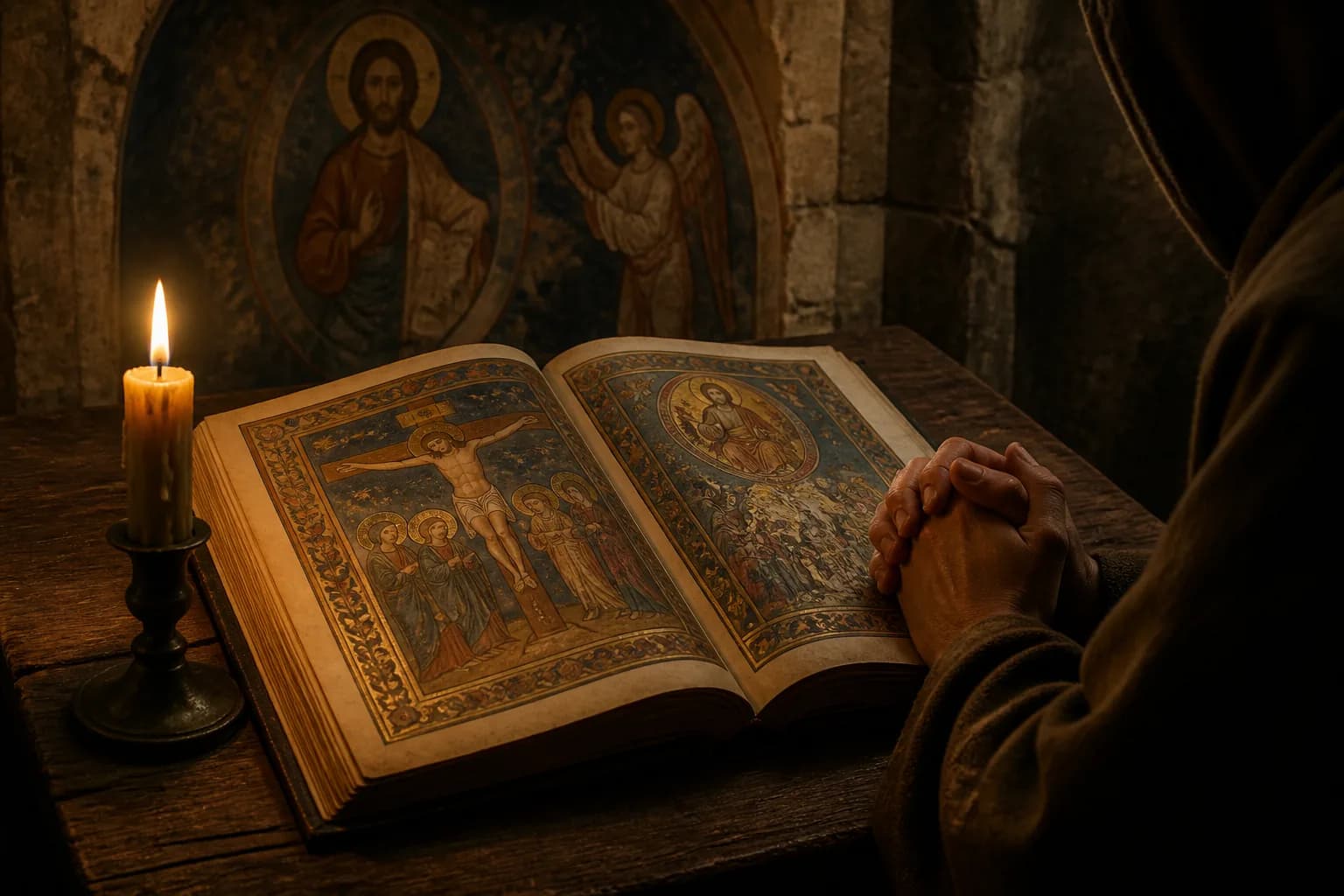
Lectio — read. Begin by reading the passage slowly, out loud or in a whisper if that helps. Read it once to hear the whole thing. Then read it again, more slowly, listening for the texture of the words. This is not skimming. You are giving the text room to speak.
Meditatio — meditate. Now linger. Usually a single word, image, or phrase will quietly stand out — it catches your attention more than the rest. Stay with it. Turn it over the way you would hold a stone in your hand, feeling its weight. Ask why this particular phrase met you today. Repeat it gently to yourself and let it settle.
Oratio — pray. Respond. Having heard God speak through the text, you now speak back from the heart — in thanks, in petition, in sorrow, in praise, in whatever the passage has stirred up. This is real conversation, honest and unscripted. You are not composing a speech; you are answering Someone who has just addressed you.
Contemplatio — contemplate. Finally, stop talking and simply rest. Contemplation is the quiet of two people who love each other and no longer need words. Let go of effort and remain in God's presence, content to be there. Nothing needs to happen. This silent resting is, in a sense, the goal toward which the first three steps were leading.
A fifth step — carrying it out
Many teachers add a fifth movement: Actio, meaning "action." The fruit of the prayer is meant to be carried out the door and into the day. A passage that moved you toward patience, forgiveness, or courage is asking to become patience, forgiveness, or courage in the hours that follow. Actio keeps Lectio Divina from becoming a private comfort sealed off from real life; it lets the Word reshape how you live.
How to do it — a simple practice
You do not need training or special books to begin. Here is a straightforward way to pray your first Lectio Divina.
Choose a short passage. Less is more. A few verses are plenty — far better than a long chapter rushed through. Many people use the Gospel reading of the day or pray slowly through a psalm. Picking the passage ahead of time saves you from flipping pages when you sit down.
Find a quiet place and time. Lectio Divina needs stillness, so choose a spot and a moment with as few interruptions as possible — early morning and late evening tend to work well. Put the phone out of reach. Begin with a short prayer asking the Holy Spirit to open your heart to whatever God wants to say.
Read it two or three times. Move through the steps without hurrying. Read, then let a phrase settle, then speak to God about it, then rest in silence. If your mind wanders, gently return to the word that stood out. There is no scoreboard here; distraction is normal, and coming back is itself part of the prayer.
Keep it to about fifteen or twenty minutes. A short, faithful time you can repeat tomorrow is worth more than a marathon you never return to. When you finish, you might carry your word or phrase with you through the day, returning to it now and then.
A last word of reassurance: this prayer is for everyone, not only for monks and nuns. Recent popes have warmly encouraged ordinary Catholics to take it up, confident that the slow, prayerful reading of Scripture can renew anyone's life of faith. You do not have to be an expert in the Bible or a master of silence. You only have to come, open the text, and listen — and let God do the rest.
Crucis Lux offers narrated, illustrated journeys through Scripture and the lives of the saints to accompany your prayer — available in the app.