Teresa of Ávila
Castle in the dry plain
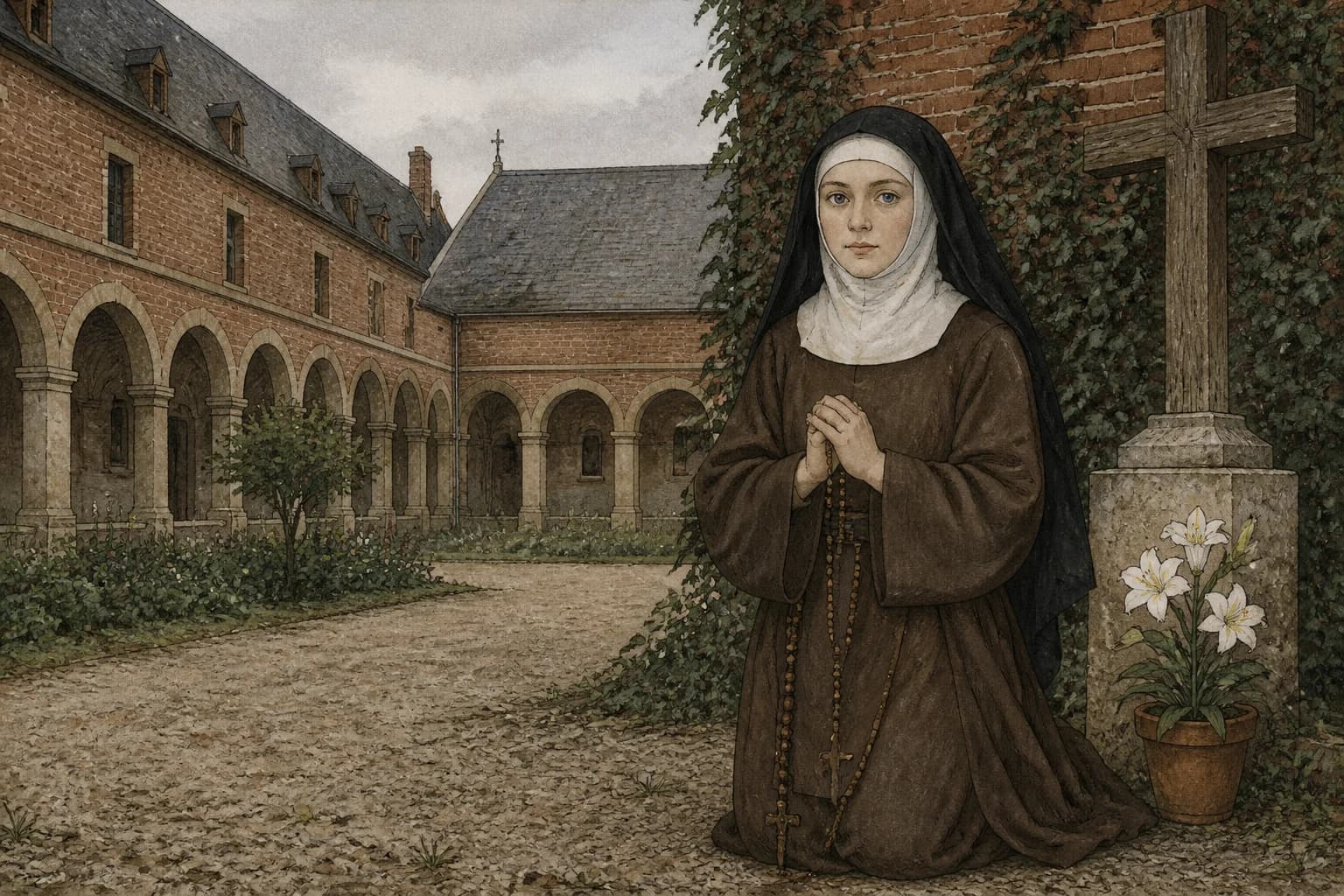
Eighteen episodes on a Castilian Carmelite who at thirty-nine saw a statue of the wounded Christ, founded seventeen reformed convents across sixteenth-century Spain, wrote the first interior castle of Spanish letters, was denounced to the Inquisition, partnered with John of the Cross, and died at sixty-seven the same night the Gregorian calendar took effect.
18 episodes · Narrated in English, Portuguese, Spanish, French and German
Episode 1 is free
Episodes
- 01
The Wound of Toledo
Toledo, 1485. A converted grandfather walks the city's churches for seven Fridays, dressed in yellow. Thirty years later, in Ávila, his granddaughter is born.
- 02
The Flight to the Moors
Ávila, 1522 to 1528. A girl reads the lives of the saints. She dreams of martyrdom. At thirteen, she loses her mother.
- 03
The Undecided
Ávila, 1528 to 1535. The elder half sister. Vanity. The Augustinian nuns. The secret decision.
- 04
The Incarnation
Ávila, 1535 to 1538. The convent of the hundred and eighty. The grille of the parlor.
- 05
The Coma in Ávila
Becedas and Ávila, 1538 to 1540. Four days between the living and the dead. Eight months without moving her body.
- 06
Twenty Years of Nothing
The Incarnation, Ávila, 1540 to 1554. The grille of the parlor. The prayer that slips away. The nun who later judges she misused grace.
- 07
Before the Wounded Christ
The Incarnation, Ávila, Lent of 1554. Thirty-nine years old. An image of Christ deeply wounded. The turning point.
- 08
The Arrow of Fire
The Incarnation, Ávila, 1554 to 1560. A Jesuit who was once a duke. A barefoot Franciscan. An angel with an arrow.
- 09
Guiomar's Plot
Ávila, 1560 to 1562. A devout widow. A niece ready to help. A plan kept secret for two years.
- 10
Saint Joseph's, Ávila
Ávila, August of 1562 to 1564. Four nuns in absolute poverty. An outraged city. Two years of storm.
- 11
The Book of Her Life
Ávila, 1562 to 1567. The four waters. The Way of Perfection. The general of the Carmelites arrives.
- 12
Juan de Yepes
Medina del Campo and Duruelo, August of 1567 to November of 1568. A small, thin friar. A village house, offered by a nobleman. The first house of Discalced friars.
- 13
The Cart of the Seventeen
Castile, Andalusia and northern Spain, 1568 to 1575. Wagons, cold, heat and lost roads. Nine houses of nuns in seven years.
- 14
The Interior Castle
Toledo and Ávila, from June to November of 1577. Five months. A structural metaphor. Seven mansions. The masterpiece.
- 15
Ana de Mendoza
Pastrana and Toledo, 1573 to 1578. A capricious princess. A denunciation to the Inquisition. Five years of institutional siege.
- 16
Juan Imprisoned
Toledo, December of 1577 to August of 1578. A tiny cell. Bread and water. The Canticle born in the dark.
- 17
Burgos in the Snow
Castile and northern Spain, 1579 to April of 1582. Five last foundations. The last one: in the cold of the north. Sixty-six years old. Frail health.
- 18
Alba de Tormes
Alba de Tormes, from September twentieth to October fourth, 1582. Fourteen final days. The night the calendar changes. Cor contritum et humiliatum, Deus, non despicies.
How this series was researched
The narration and the place and date labels were broken down into factual claims and checked against sources: 310 claims in this series were checked against a cited source. Where the sources did not support a claim, the text was corrected or reduced to what the sources actually say.
A second, independent check then went through the whole series again.
The text was reviewed separately in each of the five languages it is narrated in.
Main sources
- Libro de la Vida — Teresa de Jesús (1562–1565)
- Libro de las Fundaciones — Teresa de Jesús (1573–1582)
- Las Moradas del Castillo interior — Teresa de Jesús (1577)
- Proclamation of Saint Teresa of Ávila as Doctor of the Church — Paul VI (1970)
- Tiempo y vida de Santa Teresa — Efrén de la Madre de Dios, Otger Steggink (1968)
Tradition and debate
Where the sources are thin or disagree, the series says so. For example:
- That Teresa was born in the city of Ávila itself rests on tradition.
- Teresa's joke about having “a friar and a half” to begin with, Antonio de Heredia the whole one and the tiny John of the Cross the half, has come down through tradition.
- That the Princess of Éboli lost an eye in childhood, struck by a page's foil, is only the most widely accepted theory.
Read more on the Journal
Teresa of Ávila's Interior Castle Explained — The Seven Mansions
What The Interior Castle actually is, why Teresa wrote it in 1577, what happens in each of the seven dwelling places, what she means by prayer at every stage, and how to read the book today without getting lost.
The Liturgy of the Hours — What It Is and How to Start Praying It
A practical guide to the Divine Office: what each hour contains, what the four-week Psalter is, why beginners start with Morning and Evening Prayer, and how to use a breviary or an app without getting lost.
Teresa of Ávila's Transverberation: The Vision Behind Bernini's Sculpture
The transverberation of Saint Teresa of Ávila — her own account, the Bernini sculpture in Rome, and what Catholic mystical theology says about the experience.